
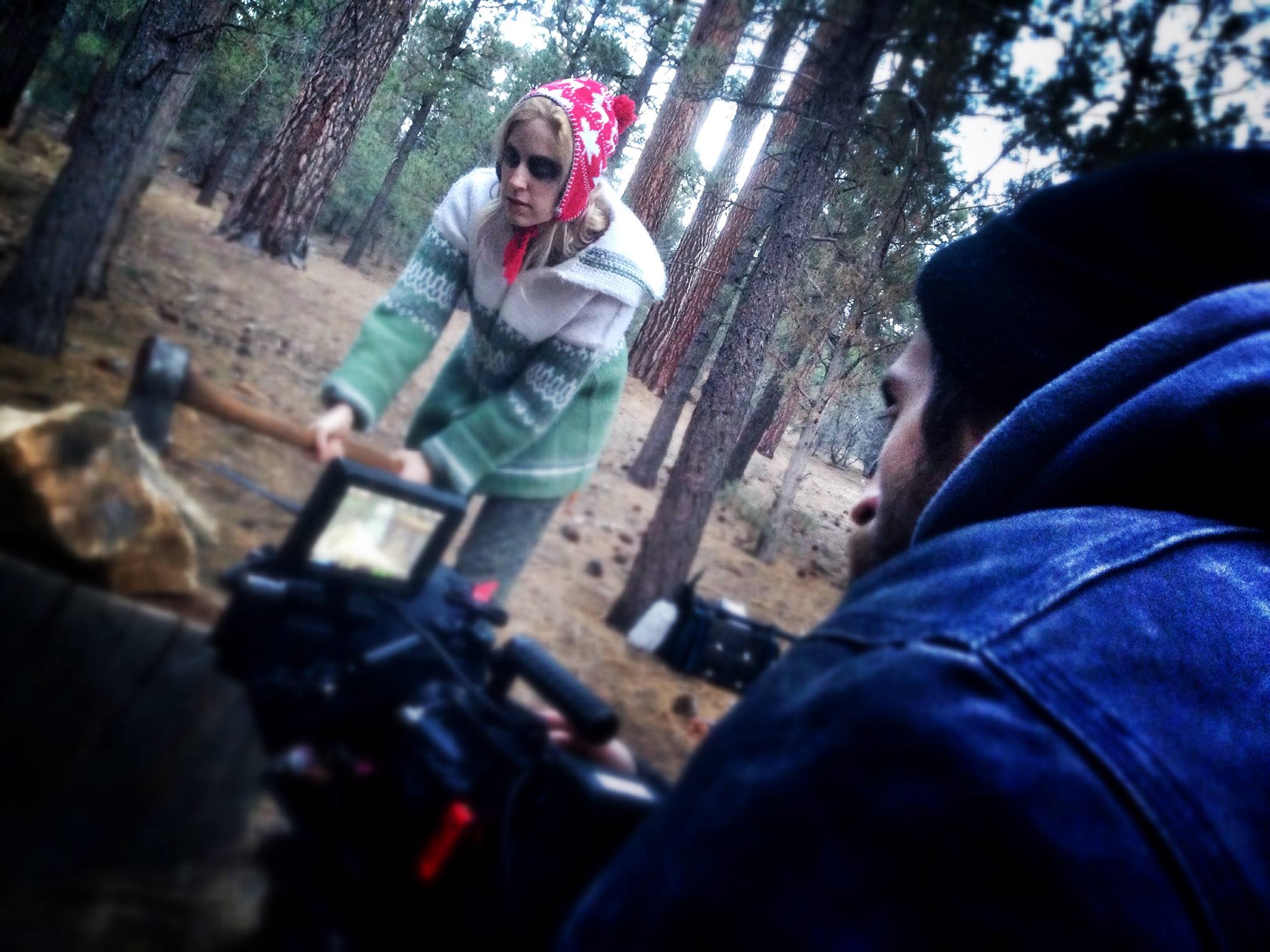
 Last month, I shared with you my experience directing my first large project. You can read part one here. This is the glorious conclusion, so now I bring you: PART DEUX!
You will steal from directors you’ve worked with.
I’ve worked on my fair share of sets as production assistant, art department, 2nd A.D, props, etc (you name it, I’ve done it.) No matter what my role, I always take time to observe the director and his/her interactions with the crew and talent. You witness first hand what works (and what doesn’t.) Most importantly, you’re there when the director isn’t. People will let their guards down and you’ll know how they REALLY feel about their leader. I’m lucky enough to have worked under some extraordinary directors who’ve run great sets (Kit Williamson, Brea Grant, Ryan Spindell, I’m looking at you guys) and I can honestly say I totally stole from them. Kit is amazing with actors and their needs (I filed that away and used it.) Brea is so open to ideas and willing to hear what her crew has to say (stole it.) And Ryan, well Ryan has this contagious playful energy that made the days fly by (mine now!) Discover what works on other sets and adapt it to your own!
Fake it ‘til you make it.
You’re not going to know the answer to every little question your cast and crew has. That’s fine, just don’t let on*. A large part of directing is to make snap decisions and roll with the punches. If your actor wants to know why her character has a specific length of hair or why his character drives a blue pick-up, you better have an answer.
*It’s absolutely okay to admit not knowing something but try not to do it excessively.
Be hands on.
Get in there, get dirty! Don’t just sit in your chair barking orders. “To be a great leader and so always master of the situation, one must of necessity have been a great thinker in action. An eagle was never yet hatched from a goose’s egg.” -James Thomas
You’re actors will have different needs.
Sometimes working with actors is like being a parent. I don’t mean this in a condescending way but rather, like children, they each require specific nurturing and interaction in accordance with their individual personalities. One actor may need constant notes and verification after every take. Another may demand emotional and physical distance to get in the head of her character. You’re job is to provide what they need in order to capture their strongest performance.
There’s no such thing as being overly prepared.
Every diagram you draw, every background story you write, every reference the script makes, can help the cast and crew immensely. Make sure these things are available to them.
Having your Production Journal with you on-set will save your ass
(See above)
Mistakes WILL be made and that’s okay
The movie you envision in your head will always be better than the real thing. In real life, necklaces will be forgotten, a prop may not get made in time, the steadicam operator will trip, or the fog machine won’t work. The important thing is how you handle it. Be professional, be understanding, and be adaptable. In the words of 7 Habits for Highly Effective Teens (thanks for making me read this in 8th grade Mrs. Morency) “Be proactive NOT reactive.”
Well there you have it. This is a small fragment of what I learned running my own set. If you have any questions or comments put them down below and I will respond!
Now go make some movies!